When Rot Starts: Why the 'before' image Needs Immediate Attention
Images: before & after
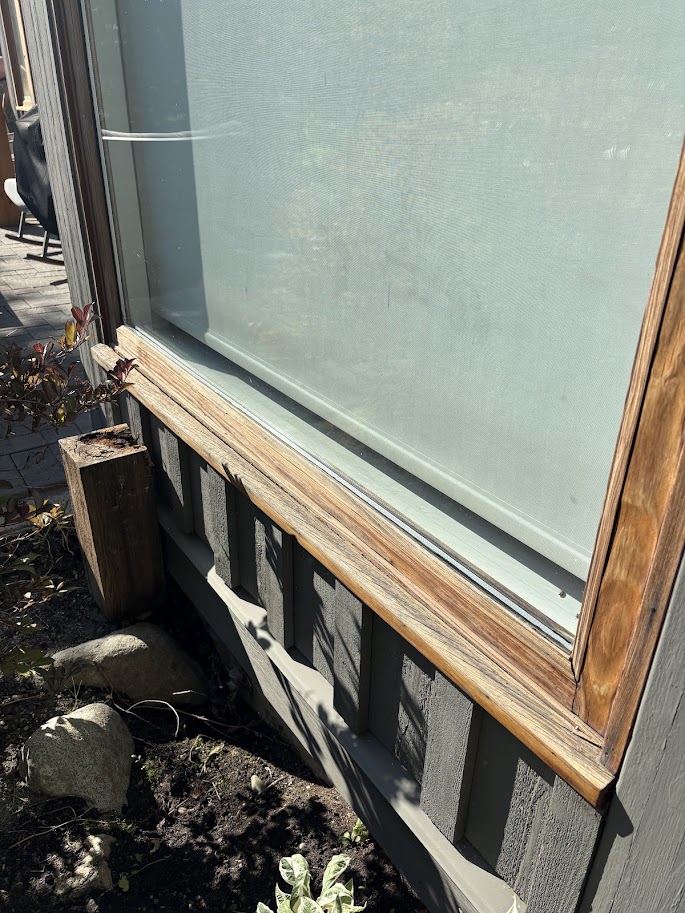
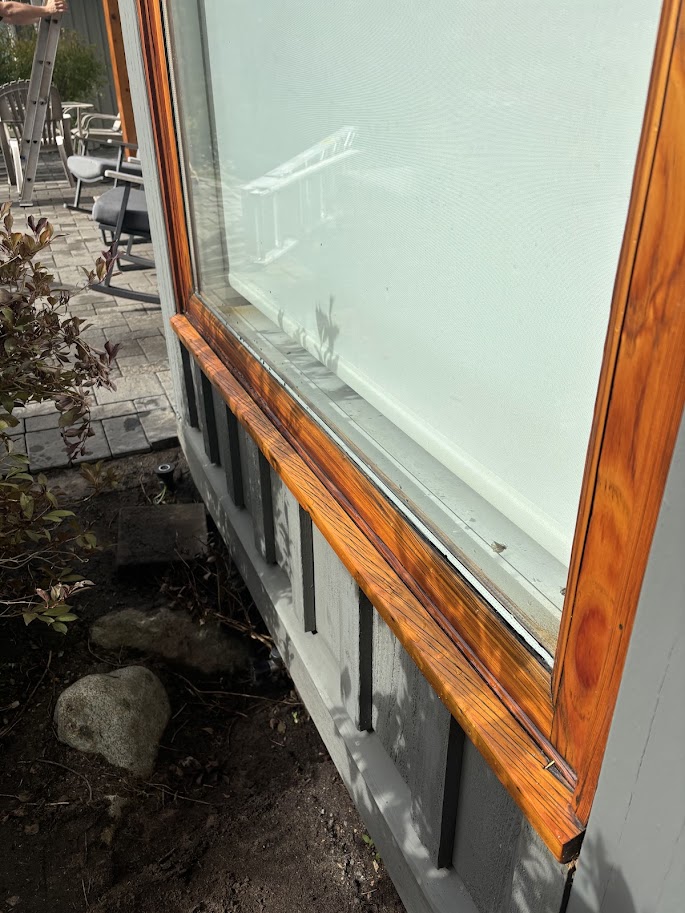
The timber in the before image is already on a very common — and avoidable — path toward progressive decay. Once the surface finish has failed, moisture, UV and biological activity (mould, algae and fungi) begin to work into the wood. Over time this softens the fibers, opens checks and raises the grain so water no longer beads and runs off. That trapped moisture accelerates rot at the surface and, if left unattended, works inward toward structural members and trim. In short: what starts as a cosmetic problem quickly becomes a maintenance and safety concern for any log home or timber structure.
In climates like Whistler and the wider Sea to Sky Corridor, the seasonal cycles of rain, sun and freeze–thaw magnify these issues. Even slow, hidden decay reduces the service life of siding, fascia and decking. Small areas of failure cause water to migrate behind mouldings and into joints, creating pockets where rot can spread unseen until visible damage appears — warped boards, loose trim or failing fasteners.
How we revive and protect wood the right way
At Duckwood Restoration we take a practical, no‑hype approach: the most durable repairs start with getting back to solid wood. That means removing every trace of the failed finish and the surface decay until you’re down to sound, dry timber — whether by careful sanding, grinding or selective hand‑tooling in tight areas. Once the substrate is clean and properly prepared, we apply three coats of a premium oil‑based or hybrid wood stain formulated for exterior log work. The first coat penetrates and evens out moisture gradients. The second builds depth and adhesion. The third provides the UV‑resistant wearing surface that sheds water and slows future checking.
This three‑coat method does two important things: it restores the wood’s appearance (the result you see in After 1) and it creates a durable protective system that extends maintenance cycles by years. We pair the staining with targeted repairs — replacing any irreparably compromised boards, improving ventilation where needed, and re‑sealing joints — so the job isn’t merely cosmetic but genuinely long‑lasting.
If you notice soft spots, dark staining, or the finish flaking away like in before, don’t wait. Early intervention saves big on labour and material costs down the road.